Wheels are the hardest-working, dirtiest part of any car. They collect brake dust, road film, tar, and iron fallout that bakes onto the finish under heat. Ordinary soap and water barely make a dent, and aggressive scrubbing risks scratching the finish. In this guide we will cover the detailer-approved way to clean car wheels and remove brake dust — safely, quickly, and with a real shine at the end.
Why brake dust is so stubborn
Brake dust is not just dirt. It is a mix of metallic particles and carbon shed from your brake pads and rotors. Under braking heat those particles fuse to the wheel surface and begin to corrode, which is why they resist regular car wash soap. Removing them properly means loosening that bonded metallic layer, not just rinsing the loose grime on top.
What you will need
- An acid-based cleaner such as Titan Acid Cleaner (32 oz spray)
- A dedicated wheel brush and a soft detailing brush for lug areas
- Nitrile gloves and eye protection
- A hose or pressure washer for rinsing
- Microfiber towels
Step-by-step: cleaning your wheels
1. Work on cool wheels in the shade
Never clean hot wheels. Heat makes products flash-dry and can streak the finish. Let the wheels cool and park out of direct sun.
2. Rinse off loose debris
Blast the wheel with water first to remove sand and grit. This prevents you from grinding loose particles into the finish during agitation.
3. Spray the cleaner and let it dwell
Apply the acid cleaner across the face of the wheel, the barrel, and around the lug nuts. Let it dwell for two to three minutes so it can break down the bonded brake dust and iron. Do not let it dry.
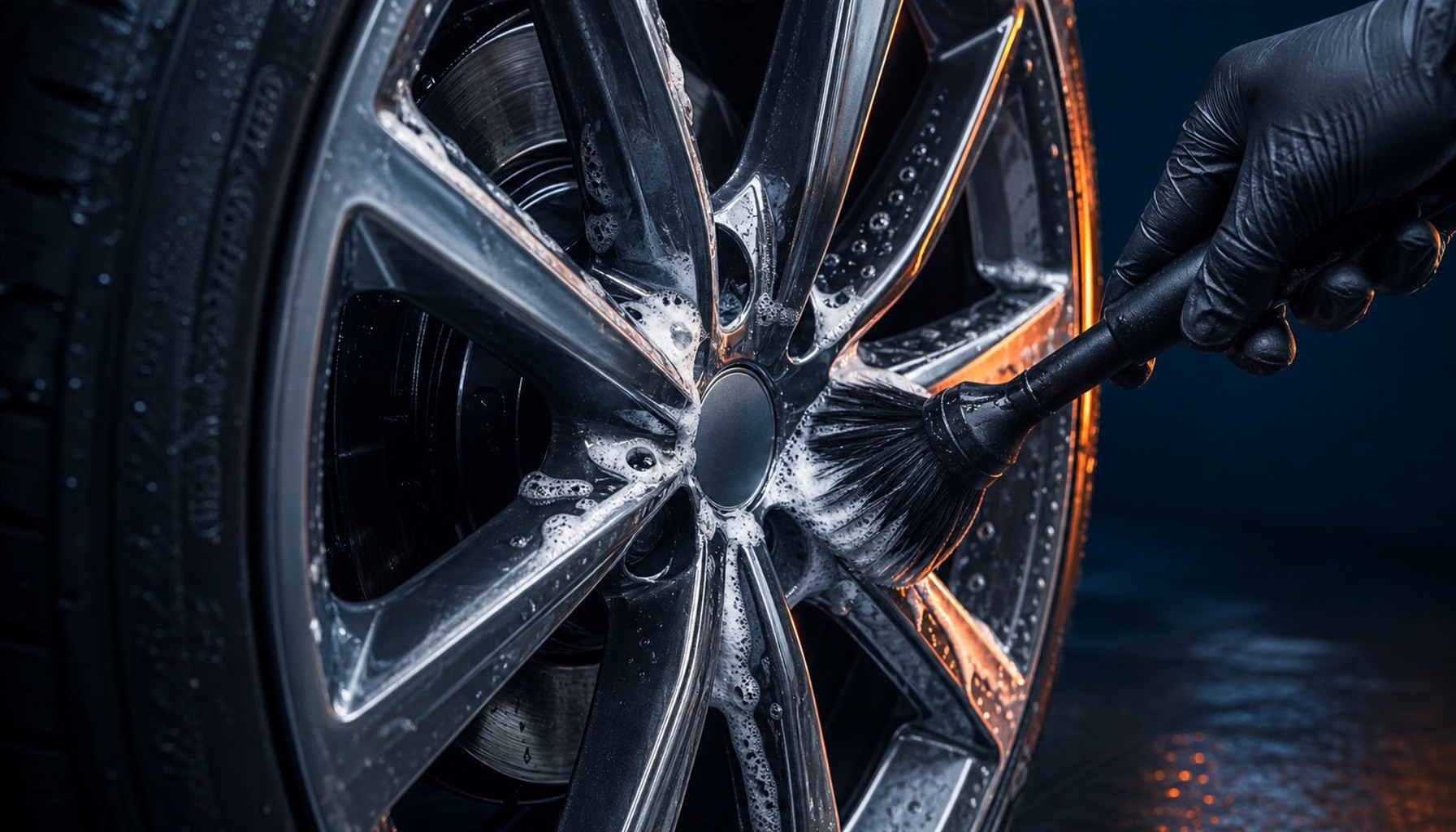
4. Agitate with a wheel brush
Work the face, spokes, and barrel with your wheel brush and a smaller brush for tight areas. With the bonded layer already chemically loosened, light agitation lifts it away.
5. Rinse thoroughly and dry
Rinse every trace of product from the wheel, including behind the spokes. Dry with a microfiber towel to prevent water spots.
Wheel finishes: know what you are cleaning
- Clear-coated and painted wheels (most modern cars) tolerate acid wheel cleaning well when you spot-test and rinse promptly.
- Polished, chrome, and bare aluminum wheels are more sensitive — test first, keep dwell time short, and rinse fast.
- Matte or wrapped finishes should be cleaned with a gentler pH-neutral product.
Finishing touch: seal them
Once the wheels are clean and dry, apply a wheel sealant or wax. A sealed wheel sheds brake dust far more easily and stays cleaner between washes — turning a 20-minute deep clean into a quick rinse next time.
Frequently asked questions
Is acid wheel cleaner safe for my rims?
On clear-coated and painted wheels — which is the majority of vehicles on the road — yes, when you spot-test, avoid hot wheels, and rinse thoroughly. For bare polished or chrome wheels, test first and keep contact time short.
How often should I deep clean my wheels?
A thorough clean every two to four weeks keeps brake dust from bonding and corroding. Sealing the wheels afterward extends that interval significantly.
Why do my wheels look dull even after washing?
That dullness is a thin bonded layer of brake dust and iron that soap leaves behind. Only a cleaner that chemically releases that layer will restore the true shine — which is exactly what an acid-based wheel cleaner does.
The bottom line
Clean wheels come down to chemistry plus technique: loosen the bonded brake dust with the right cleaner, agitate gently, rinse completely, and seal. Do that and your wheels look factory-fresh in minutes. Shop Titan Acid Cleaner and detail like a pro — then keep going with our guide to removing water spots from your car.