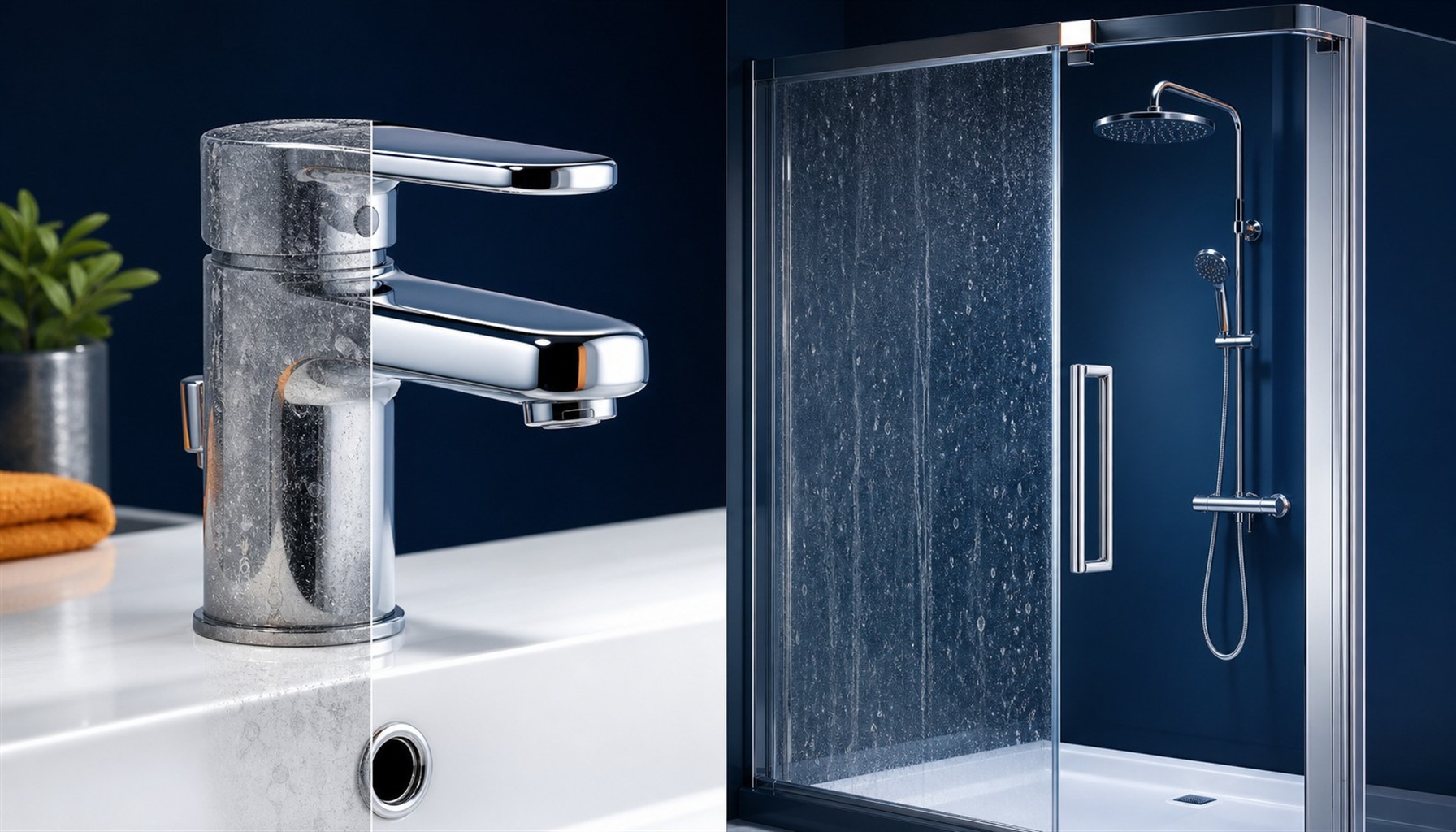
Cloudy shower glass, white spots around faucets, dull stainless steel, stained tile, and stubborn marks on vehicle glass often have one thing in common: mineral buildup from hard water. These deposits can be extremely difficult to remove with ordinary soap or household cleaners because they are not primarily grease or dirt — they are hardened minerals bonded to the surface. The good news is that the right chemistry can make the job much easier. In this guide, we'll explain what hard water stains are, why they form, how acid-based cleaners work, and how to remove mineral buildup safely from common water-safe surfaces.
What causes hard water stains?
Hard water contains dissolved minerals such as calcium, magnesium, iron, and lime. While the water itself may look completely clear, those minerals remain behind when the water evaporates. Over time, repeated exposure causes the deposits to build up layer by layer, creating a chalky white haze, cloudy spots, crusty residue, or even orange and brown discoloration when iron is present.
Hard water stains commonly appear on shower doors and bathroom glass, chrome faucets and fixtures, ceramic tile, stainless steel, fiberglass surfaces, vehicle glass, wheels, sinks, and other frequently wet areas.
Why soap and all-purpose cleaners often do not work
Most household cleaners are designed to remove grease, food residue, fingerprints, soap residue, and other organic contamination. Hard water scale is different because it is made primarily of mineral deposits. That is why you can spray, wipe, and scrub the same cloudy area several times without seeing much improvement.
Mineral deposits respond much better to acidic chemistry. A properly formulated acid cleaner helps break down calcium, lime, rust, and other mineral buildup so it can be loosened and rinsed away instead of mechanically scrubbed off.
Why an acid cleaner works on mineral deposits
Acid-based cleaners are especially effective on alkaline mineral deposits. When the cleaner comes into contact with buildup such as calcium scale, the acidic ingredients begin breaking down the mineral structure. This reduces the bond between the deposit and the underlying surface, allowing the chemistry to perform much of the work instead of relying on aggressive scrubbing.
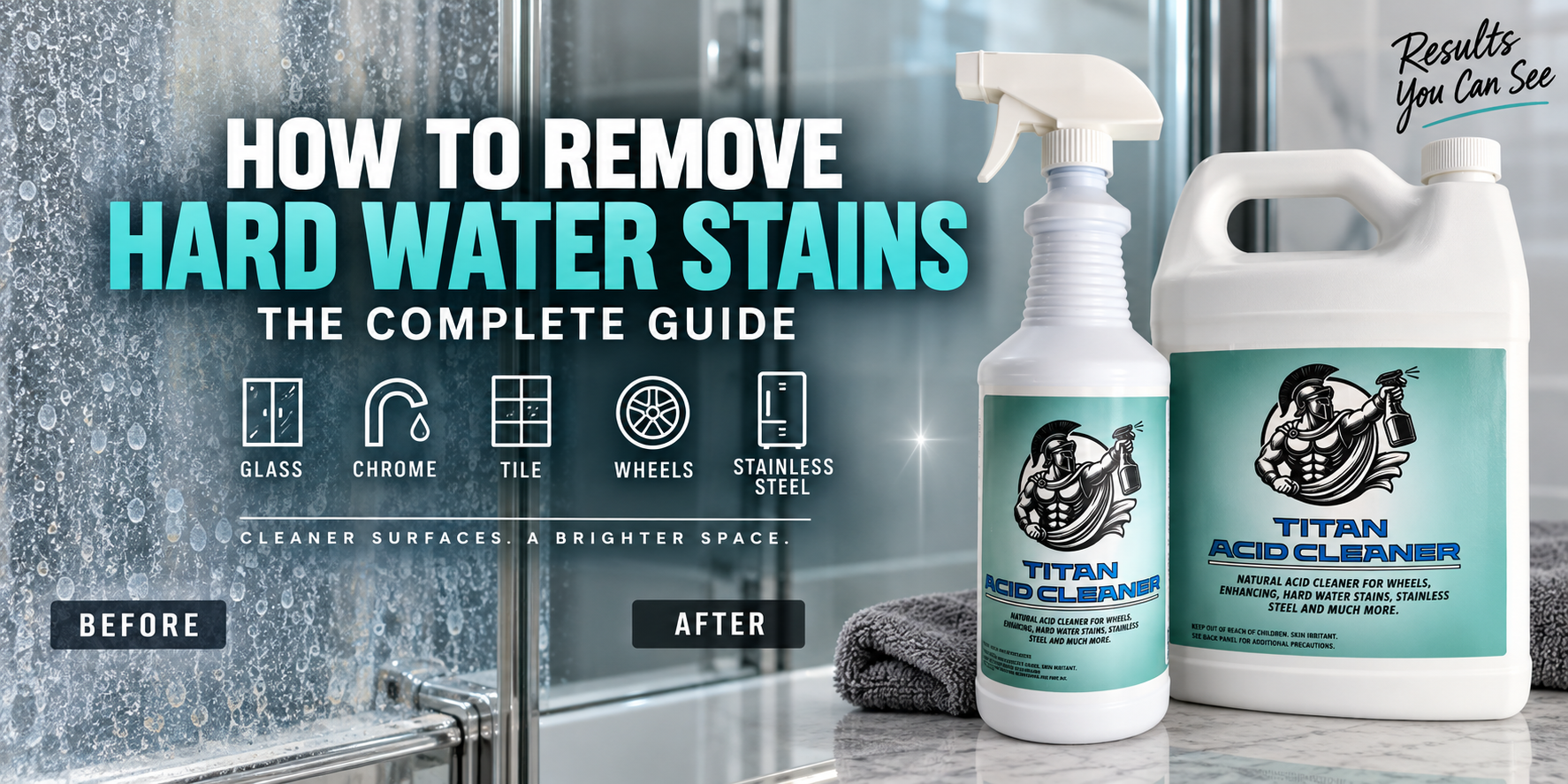
For stubborn mineral buildup, a purpose-built product such as Titan Acid Cleaner can be used as part of a professional cleaning process for approved surfaces.
What you will need
- Titan Acid Cleaner
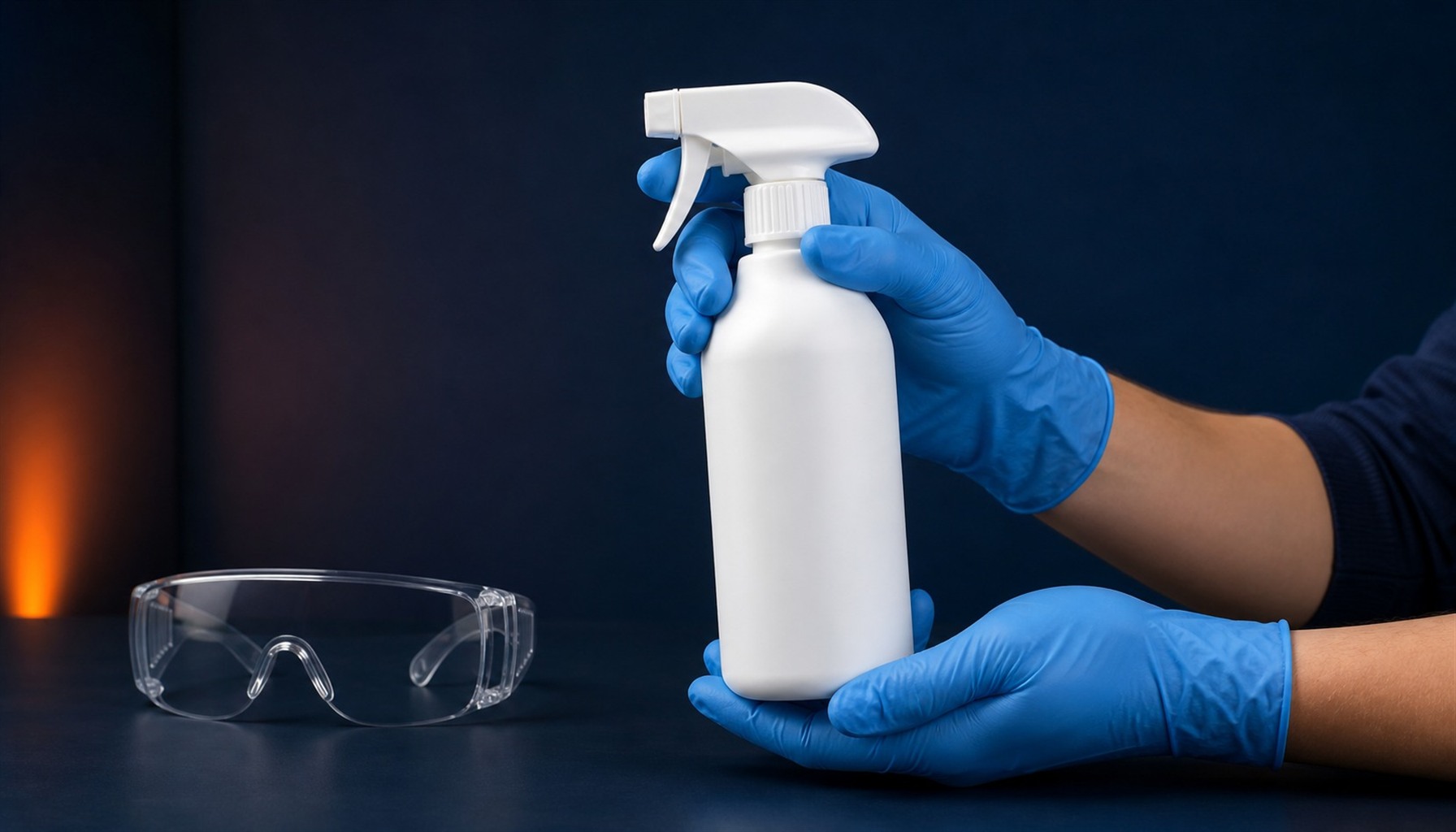
- Protective gloves and eye protection
- A non-scratch scrub pad or soft-bristle brush
- Microfiber towels
- Clean rinse water
- A hose for larger outdoor applications when appropriate
How to remove hard water stains step by step
1. Read the product label first
Before using any chemical cleaner, read the directions and precautions on the product label. Different surfaces respond differently to acidic products, so proper use is important. Wear suitable gloves and eye protection, work in a well-ventilated area, and follow all dilution, dwell-time, and rinsing instructions provided by the manufacturer.
2. Test a small hidden area
Always test the cleaner on an inconspicuous section before treating the entire surface. This is especially important when you are unsure of the material, coating, finish, or previous treatment. Acid cleaners should generally be avoided on acid-sensitive materials such as marble, travertine, limestone, and other natural stone unless the product specifically states that the surface is compatible.
3. Remove loose dirt first
Rinse or wipe away loose dust, sand, dirt, and debris before applying the cleaner. This helps the product make more direct contact with the mineral deposit and reduces the chance of scratching delicate surfaces during agitation.
4. Apply the cleaner evenly
Apply Titan Acid Cleaner according to the directions on the label. Make sure the affected area is evenly covered, especially where mineral deposits are visibly concentrated. For vertical surfaces such as shower glass, work in manageable sections so you can maintain even coverage and prevent the cleaner from drying before rinsing.
5. Allow the chemistry to work
Give the cleaner the recommended contact time so it can begin breaking down the mineral buildup. Heavy deposits may require more contact time or more than one treatment. Do not allow the product to dry on the surface.
6. Agitate the deposit gently
Use a non-scratch scrub pad, microfiber towel, or soft-bristle brush to lightly work the area. Once the cleaner has begun weakening the mineral bond, aggressive pressure should not be necessary. Let the chemical action do most of the work.
7. Rinse thoroughly
After the deposit has loosened, rinse the surface completely with clean water. Thorough rinsing removes dissolved minerals, loosened contamination, and remaining cleaning solution.
8. Dry the surface
Finish by drying the surface with a clean microfiber towel. This is particularly important on glass, chrome, and stainless steel because fresh water can leave new mineral spots as it evaporates.
How to remove hard water stains from shower glass
Shower doors are one of the most common places for severe hard water buildup. Every shower leaves tiny mineral deposits behind, and soap residue can combine with those minerals to create an even thicker cloudy film.
Start by rinsing loose soap and debris from the glass. Apply the cleaner according to the label, allow it to work, gently agitate with a non-scratch pad, rinse thoroughly, and dry the glass completely. For heavily neglected shower doors, multiple applications may be safer and more effective than trying to remove years of buildup with aggressive scrubbing in a single pass.
How to clean chrome faucets and fixtures
Chrome fixtures frequently develop white rings and crusty deposits around faucet bases, handles, and aerators. These stains are usually caused by water sitting on the fixture and evaporating repeatedly. Use a controlled amount of cleaner, avoid unnecessary contact with surrounding materials, gently wipe the mineral deposits, rinse thoroughly, and dry the fixture immediately afterward.
How to remove mineral deposits from tile
Ceramic and other acid-compatible tile surfaces can collect mineral scale in showers, around pools, and near sinks. Focus the cleaner on the mineral buildup rather than saturating surrounding materials unnecessarily. Pay particular attention to grout because some grout and stone materials may be sensitive to acidic products. Always verify compatibility and perform a spot test before treating a large area.
How to clean stainless steel water spots
Stainless steel often shows mineral spotting very clearly, especially around sinks, commercial equipment, appliances, and areas exposed to frequent rinsing. When the surface is compatible with the cleaner, mineral deposits can be loosened chemically rather than polished aggressively. Rinse well and dry with a clean microfiber towel, following the grain of the stainless steel when wiping.
Using acid cleaner on automotive glass and wheels
Vehicles exposed to sprinklers, rain, washing, and untreated water can develop mineral spotting on glass and wheels. If those deposits remain long enough, they may become increasingly difficult to remove with ordinary car shampoo.
An acid cleaner can help break down mineral contamination on compatible automotive surfaces. Always work on a cool surface, follow the product directions, avoid letting the cleaner dry, and rinse thoroughly. Use extra caution around polished metals, raw aluminum, delicate trim, specialty coatings, and other sensitive finishes.
Surfaces that require extra caution
Acid cleaners are powerful tools, but they are not appropriate for every material. Materials that may require special care include:
- Marble
- Travertine
- Limestone and other natural stone
- Raw or polished aluminum
- Brass and other delicate metals
- Specialty coatings
- Unsealed or damaged surfaces
If you are unsure what a surface is made from, identify the material before cleaning it or test the product in a hidden area first.
How to prevent hard water stains from returning
Removing mineral deposits is only half the battle. Preventing water from repeatedly drying on the surface can dramatically reduce future buildup.
- Use a squeegee on shower glass after each use.
- Dry faucets and chrome fixtures with a microfiber towel.
- Dry stainless steel after rinsing.
- Avoid allowing sprinkler water to dry on vehicle glass and wheels.
- Perform light maintenance cleaning before heavy scale develops.
- Consider a water-softening system if hard water affects your entire property.
Why regular maintenance is easier than heavy restoration
Mineral deposits become more difficult to remove as they accumulate. A thin layer of fresh water spotting may come off quickly, while months or years of buildup may require repeated treatments. Routine maintenance prevents deposits from developing into thick scale while reducing the amount of chemical, agitation, and time needed each time you clean.
32 oz spray bottle or gallon: which size should you choose?
Titan Acid Cleaner is available in convenient sizes for different types of users. The 32 oz spray bottle is a practical choice for homeowners, vehicle owners, detailers working on individual jobs, and anyone who wants a ready-to-handle bottle for smaller cleaning projects. The gallon size is better suited for frequent users, professional detailers, maintenance teams, commercial facilities, and customers who regularly treat larger areas or want to refill smaller working bottles.
Both options provide the same type of mineral-removing cleaning power while allowing you to choose the quantity that best matches your workload. Shop Titan Acid Cleaner to see both options.
Frequently asked questions
Does vinegar remove hard water stains?
Vinegar contains acetic acid and can sometimes help with light mineral spotting. However, household vinegar may work slowly on established buildup and may not be practical for severe deposits. A purpose-built acid cleaner is designed specifically for this type of contamination.
Can hard water stains permanently damage glass?
In some cases, yes. Mineral deposits that remain on glass for long periods can contribute to etching or surface damage. If the mineral deposit has already been removed and the glass still appears cloudy, the remaining marks may be permanent etching rather than removable buildup.
Can I use an acid cleaner on every type of tile?
No. Ceramic and other acid-resistant materials may tolerate acidic cleaning products, but natural stone can be damaged by acid. Always identify the tile material and test the cleaner before widespread use.
Do I need to scrub hard water stains aggressively?
Usually not. The goal of using an acid cleaner is to chemically weaken the mineral deposit so less mechanical effort is required. Gentle agitation with the correct tool is generally preferable to heavy scrubbing.
How often should I use an acid cleaner?
The ideal schedule depends on water hardness and how frequently the surface gets wet. In high-use areas, periodic maintenance before heavy buildup develops is usually easier than waiting until the mineral deposits become severe.
Can Titan Acid Cleaner be used professionally?
Titan Acid Cleaner can be useful for customers who regularly encounter mineral deposits, including automotive detailers, property maintenance professionals, cleaning companies, and facility teams. Always follow the product label and verify compatibility with the surface being treated.
The bottom line
Hard water stains are difficult to remove because they are mineral deposits, not ordinary dirt. That means the solution is not necessarily more scrubbing — it is using the correct chemistry for the contamination.
By using an acid-based cleaner correctly, allowing it time to break down mineral scale, gently agitating the affected area, and rinsing thoroughly, you can tackle stubborn calcium, lime, rust, and water spotting on many compatible surfaces.
If hard water stains are making your glass, fixtures, stainless steel, wheels, or other surfaces look dull and neglected, shop Titan Acid Cleaner and choose the size that fits your cleaning needs.