A bathroom can be spotless and still look grimy. The culprits are soap scum, hard water film on the glass and chrome, and discolored grout lines — all of which shrug off everyday sprays. Getting a bathroom truly clean means using the right chemistry on each of those problems. Here is the professional approach to cleaning tile, grout, and fixtures so the whole room looks bright again.
Why bathrooms get grimy so fast
Three things build up in a bathroom: soap scum (a waxy film from soap reacting with hard water minerals), mineral scale (the same hard water deposits that cloud glass and chrome), and grout discoloration (dirt and mineral buildup settling into porous grout lines). Because two of the three are mineral-based, an acid cleaner is uniquely well suited to the job.
What you will need
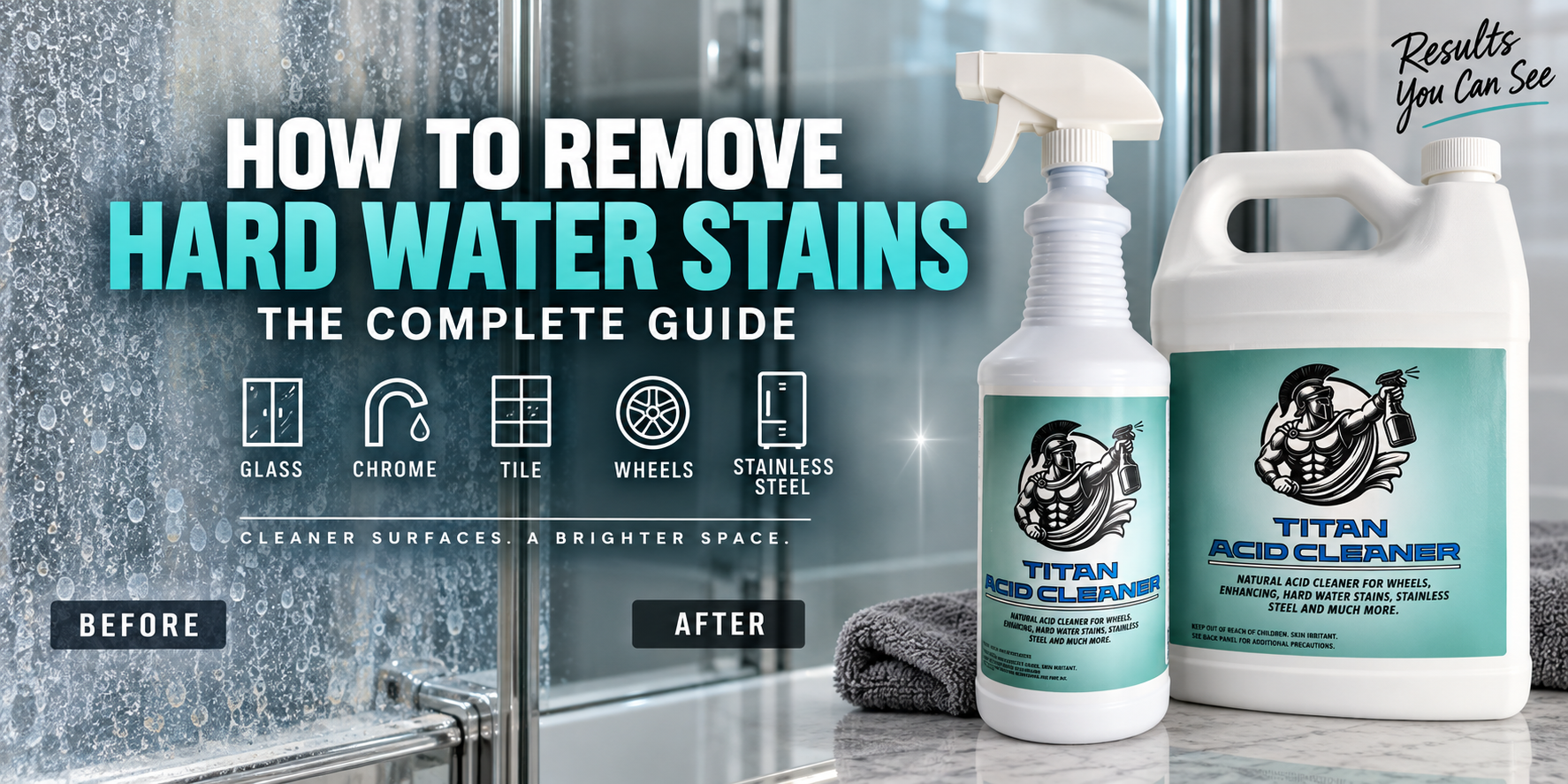
- An acid-based cleaner such as Titan Acid Cleaner (32 oz spray)
- A grout brush and a non-scratch scrub pad
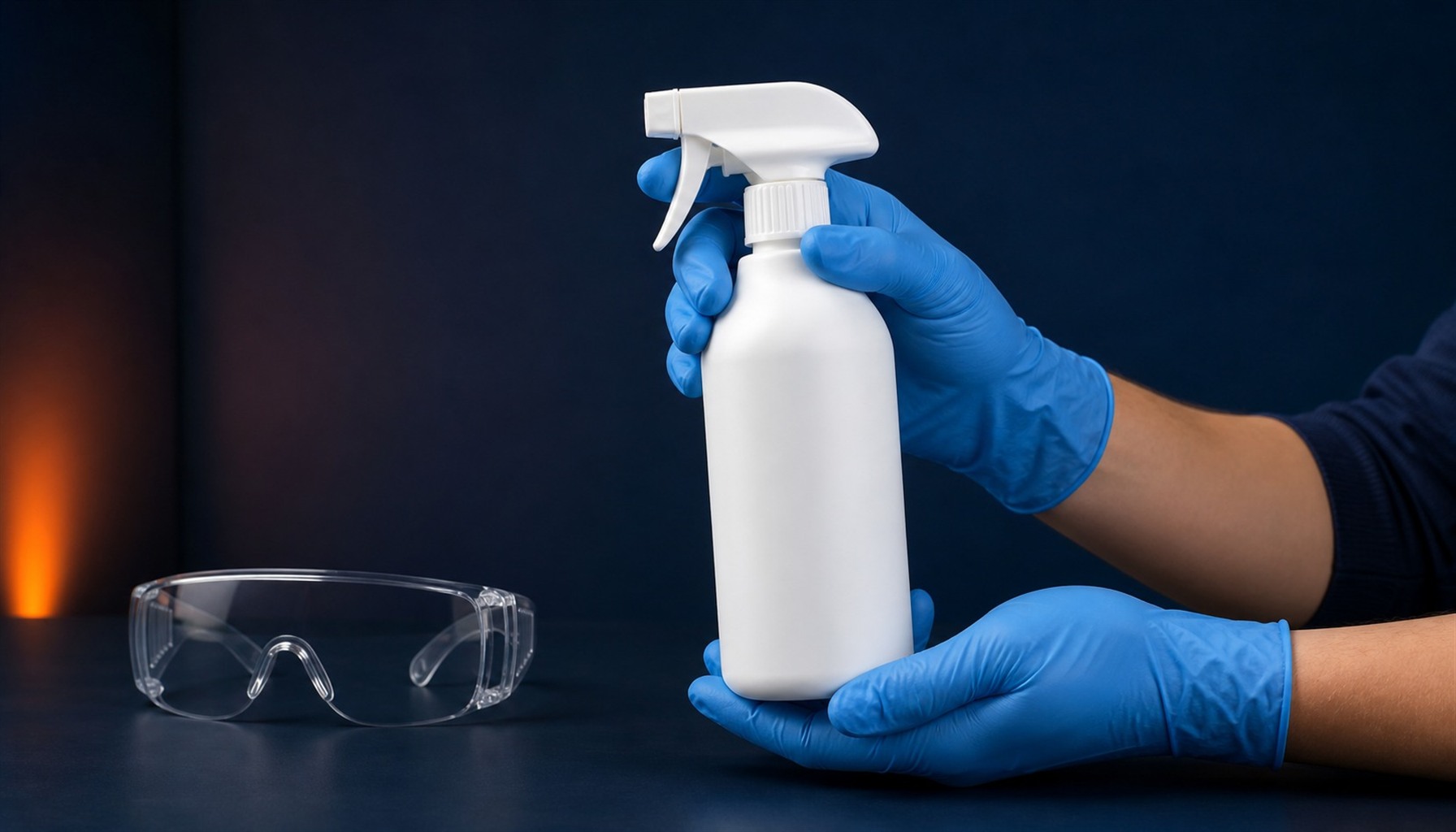
- Nitrile gloves and eye protection
- Microfiber towels
- Good ventilation — run the fan or open a window
Step-by-step: a pro bathroom clean
1. Ventilate and clear the area
Turn on the exhaust fan or open a window, and remove bottles and mats so you can reach every surface.
2. Start with the tile and grout
Spray the acid cleaner onto ceramic or porcelain tile and along the grout lines. Let it dwell two to three minutes so it can break down soap scum and mineral buildup. Then work the grout with a grout brush and wipe the tile with a non-scratch pad.
3. Move to glass and chrome fixtures
Treat shower glass, faucets, showerheads, and towel bars. These collect the heaviest hard water film, and the acid cleaner clears the cloudy scale that leaves glass looking permanently foggy.
4. Rinse everything thoroughly
Rinse all treated surfaces with clean water. Wipe down with microfiber so nothing dries back onto the surface.
5. Dry the glass and metal
Dry shower glass and fixtures to prevent the very next round of water spots. A quick wipe now saves a scrub later.
Important: what to keep acid cleaner off of
- Natural stone tile — marble, travertine, and limestone will etch. Use a pH-neutral stone cleaner instead.
- Unsealed or colored grout — spot-test first; seal grout afterward to protect it.
- Delicate finishes on antique or specialty fixtures — test before treating.
Ceramic and porcelain tile, glass, chrome, and stainless steel are the acid-safe surfaces that make up most modern bathrooms.
How to keep it clean longer
- Squeegee the shower glass after each use to stop hard water film before it forms.
- Wipe fixtures dry after cleaning.
- Do a quick acid-cleaner maintenance pass on glass and chrome every couple of weeks.
- Seal your grout once or twice a year so it stops absorbing grime.
Frequently asked questions
What is the best cleaner for soap scum and hard water in a shower?
An acid-based cleaner, because soap scum and hard water film are both mineral-driven. It dissolves the buildup that neutral bathroom sprays leave behind, especially on glass and chrome.
Can I use acid cleaner on the whole bathroom?
On ceramic and porcelain tile, glass, chrome, and stainless steel — yes. Keep it off natural stone and test colored or unsealed grout first.
How do I get grout white again?
Let the cleaner dwell on the grout line, agitate with a grout brush, and rinse. For deeply stained grout, a second pass may be needed, and sealing afterward keeps it looking clean far longer.
The bottom line
A truly clean bathroom comes from matching each problem to the right chemistry — and since scale and soap scum are mineral-based, an acid cleaner does the heavy lifting on tile, glass, and fixtures. Shop Titan Acid Cleaner and see the difference on your next deep clean. For more, read our guide on removing hard water stains for good.