If you have scrubbed a shower door, faucet, or car window until your arm ached and the cloudy white film still would not budge, you are not doing anything wrong — you are using the wrong kind of cleaner. Hard water stains are mineral deposits, and mineral deposits do not respond to soap. They respond to acid chemistry. In this guide we will explain exactly why that is, and walk through a professional method for removing hard water stains and mineral scale from almost any water-safe surface.
What hard water stains actually are
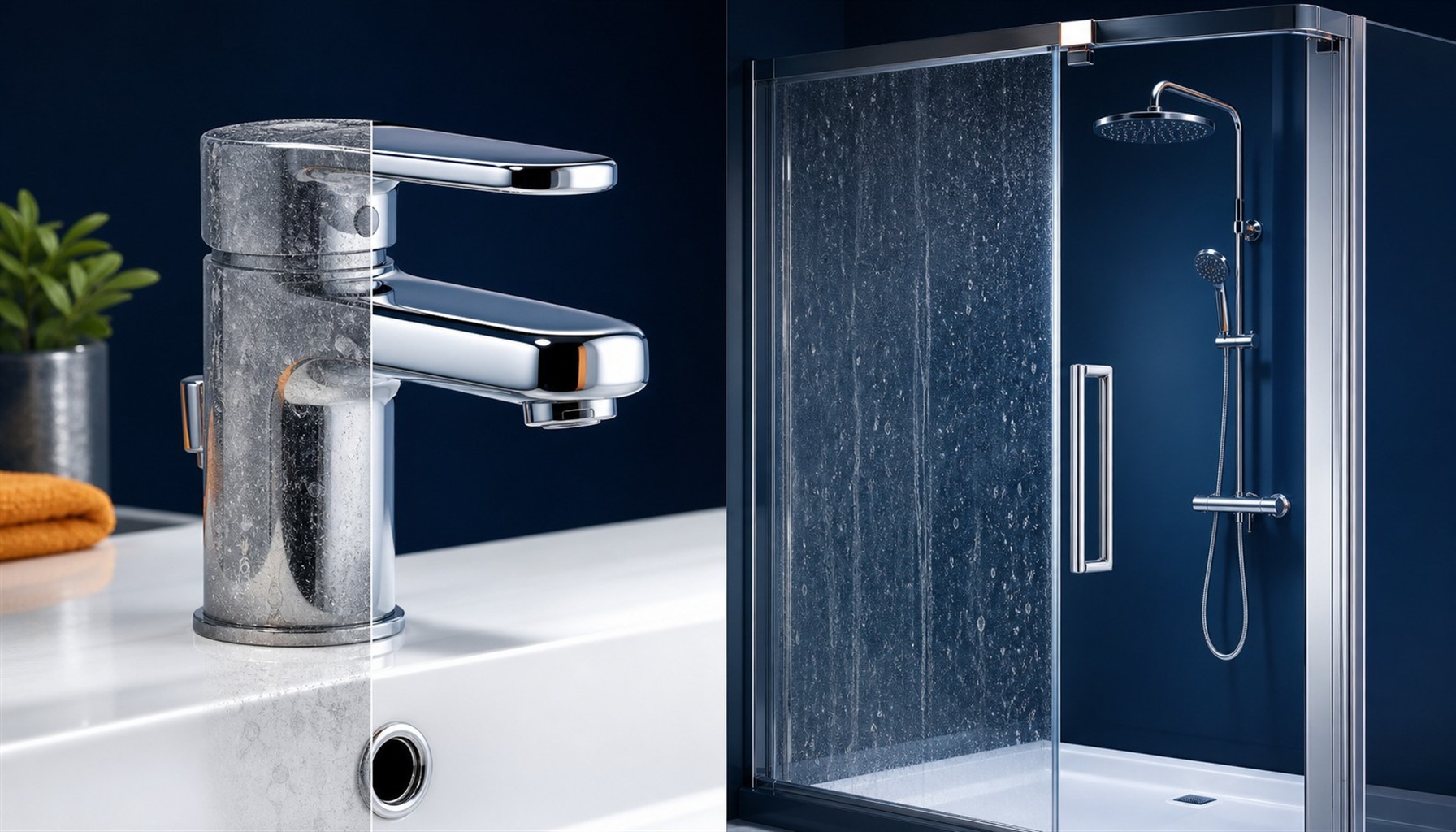
"Hard" water simply means water with a high concentration of dissolved minerals — mostly calcium and magnesium, often with iron and lime. Every time hard water dries on a surface, it leaves those minerals behind. Over days and weeks the deposits build into the chalky white (sometimes rust-tinted) film you see on glass, chrome, tile, and stainless steel. Because the stain is a solid mineral crust bonded to the surface, wiping it with dish soap or an all-purpose spray barely touches it.
Why regular cleaners fail
Most household cleaners are pH-neutral or alkaline. They are formulated to lift grease and organic grime, not to break down mineral scale. Dissolving calcium, lime, and rust requires a mild acid, which chemically converts the hard mineral crust into soluble salts you can simply rinse away. This is why a purpose-built acid cleaner removes in one pass what a general cleaner cannot remove in ten.
What you will need
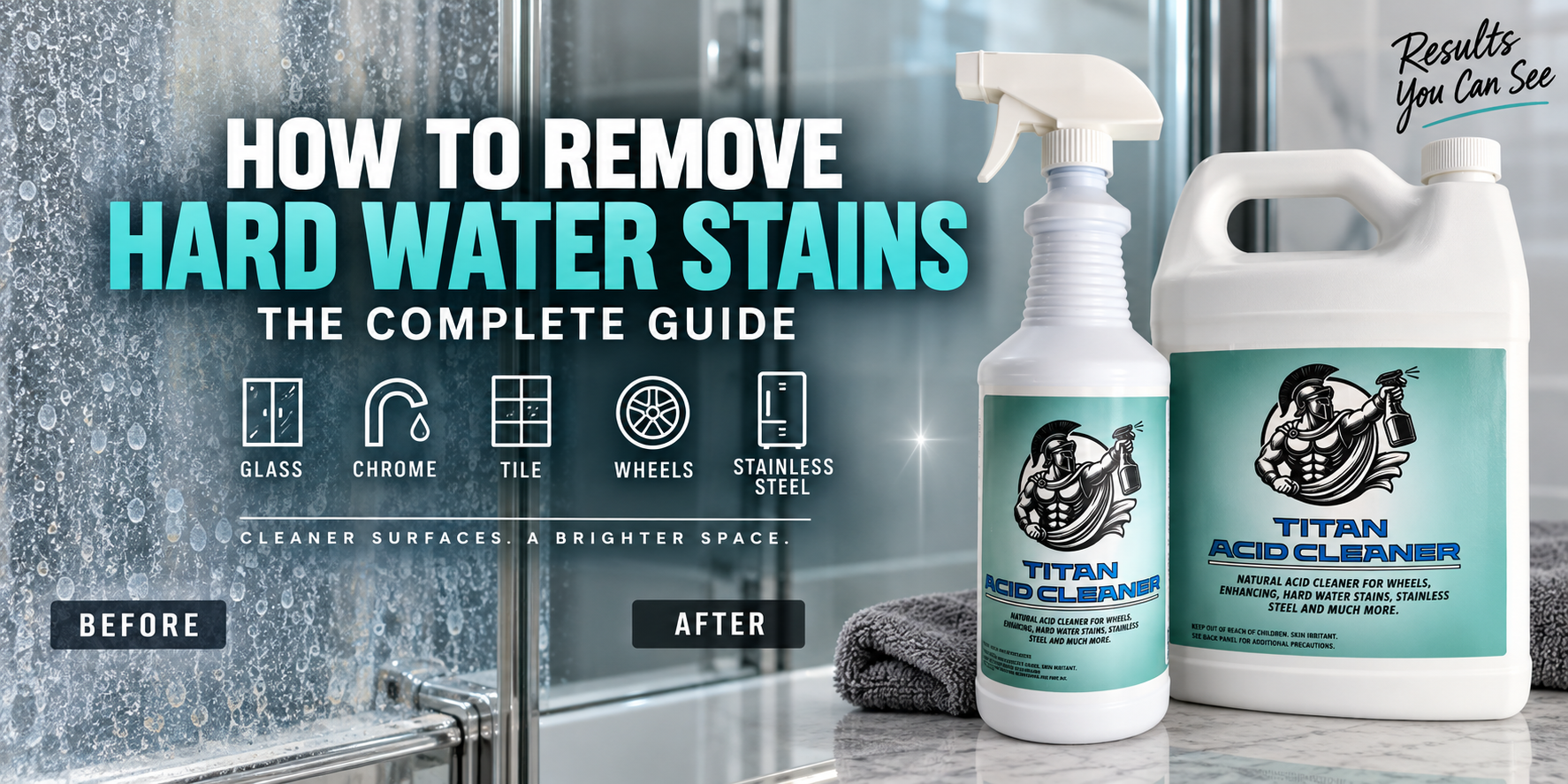
- An acid-based cleaner such as Titan Acid Cleaner (32 oz spray)
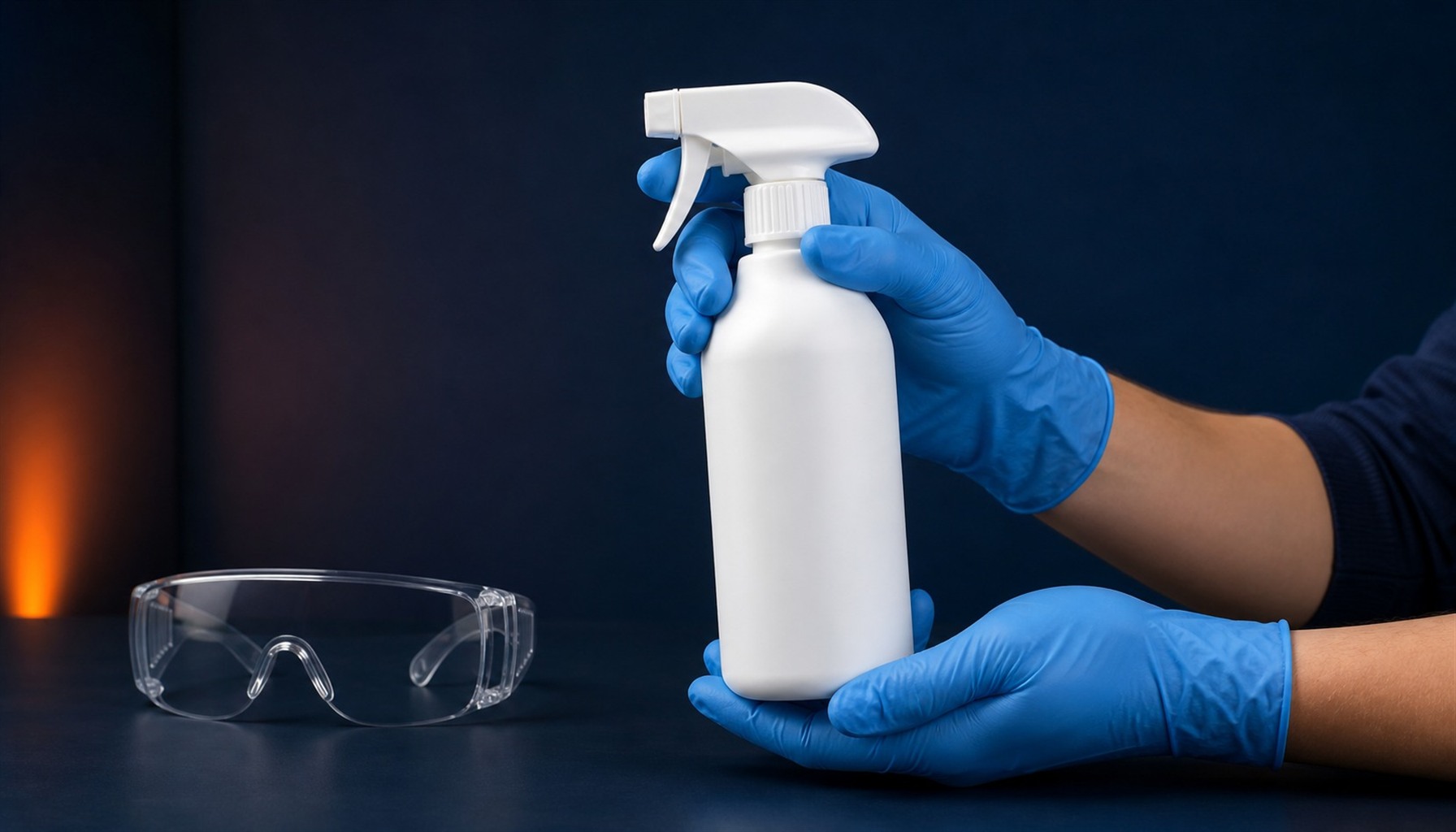
- Nitrile or rubber gloves and eye protection
- A non-scratch scrub pad or soft-bristle brush
- Microfiber towels
- A bucket of clean water for rinsing (or a hose for outdoor surfaces)
Step-by-step: removing hard water stains
1. Test an inconspicuous spot first
Always spot-test on a hidden area. Acid cleaners are safe on glass, ceramic tile, chrome, stainless steel, fiberglass, and most sealed surfaces — but they should never be used on natural stone such as marble, travertine, or limestone, which acid will etch. When in doubt, test and wait five minutes.
2. Apply the cleaner to the deposit
Spray the affected area until it is evenly wet. For thick scale, apply generously so the product stays in contact with the mineral crust.
3. Let it dwell
Give the acid time to work — usually two to five minutes. You may see the deposits begin to loosen or fizz slightly as the minerals dissolve. Do not let the product dry on the surface; re-wet if needed.
4. Agitate lightly
Work the area with a non-scratch pad or soft brush. Because the chemistry has already broken the mineral bond, light pressure is all it takes. Let the product do the work instead of scrubbing aggressively.
5. Rinse thoroughly and dry
Rinse with clean water until all residue is gone, then dry with a microfiber towel. Drying the surface is what prevents the very next round of spotting.
Surfaces to avoid
Keep acid cleaners off polished natural stone (marble, granite, travertine), unsealed grout, and delicate metals like brass or aluminum unless the product label specifically approves them. For those materials, a pH-neutral cleaner is the safe choice.
How to stop hard water stains from coming back
- Dry glass and fixtures after each use — a quick squeegee on shower doors prevents 90 percent of buildup.
- Wipe down faucets and sinks with a dry cloth after cleaning.
- Consider a water softener if your whole home suffers from scale.
- Do a light acid-cleaner maintenance pass monthly so deposits never get a foothold.
Frequently asked questions
Will vinegar remove hard water stains?
Household vinegar is a weak acid and can help with very light film, but it is slow and often not strong enough for established scale. A dedicated acid cleaner is formulated at the right strength to remove heavy deposits quickly and consistently.
Is it safe to use an acid cleaner on car glass?
Yes. Automotive glass and chrome handle acid cleaning well, which is why detailers use it to clear water spots. Just avoid contact with unsealed trim and rinse fully. See our guide on removing water spots from your car.
How often should I clean mineral deposits?
For high-use areas like showers, a light monthly pass keeps scale from ever building up. Heavy deposits that have accumulated for months may need a longer dwell time or a second application.
The bottom line
Hard water stains are not a scrubbing problem — they are a chemistry problem. Match the mineral deposit with the right acid-based cleaner and it dissolves instead of fighting back. Shop Titan Acid Cleaner to get the professional-grade formula detailers and facility managers rely on.