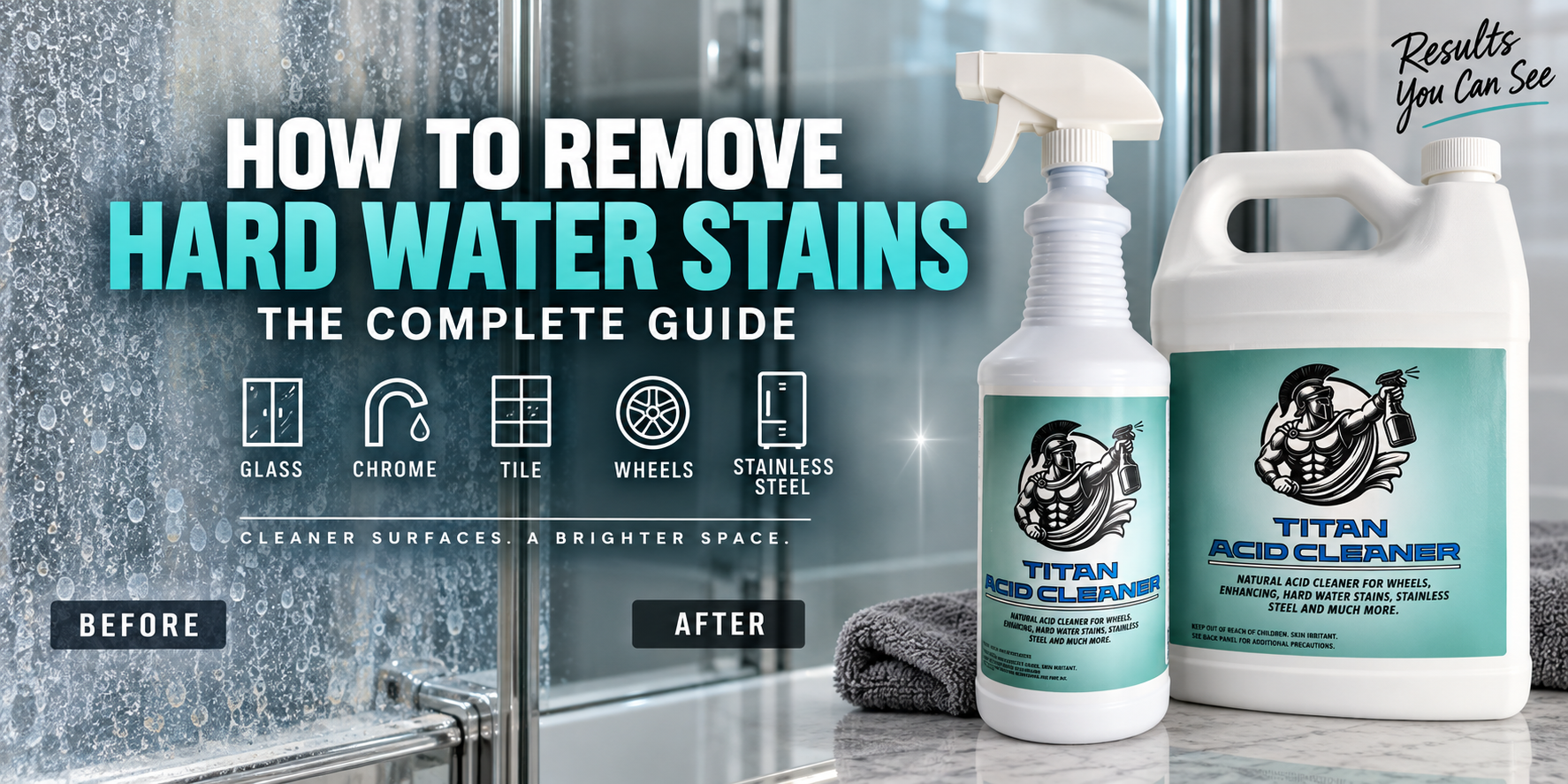
The word "acid" makes people picture something dangerous and corrosive. But acid-based cleaners are among the most effective — and, used correctly, among the safest — tools for removing rust, hard water scale, and mineral deposits that ordinary cleaners cannot touch. This guide explains what an acid cleaner actually is, why the right formulation is safer than the harsh industrial solvents it replaces, and exactly how to use one without worry.
What "acid cleaner" actually means
Acid is simply a measure of pH. Lemon juice, vinegar, and soda are all acidic. A cleaning acid works by chemically reacting with mineral deposits — rust, calcium, lime, and scale — and converting them into soluble compounds that rinse away. That targeted chemistry is why a mild acid removes a mineral crust that a neutral cleaner just slides over.
There is a wide range between weak food-grade acids and the caustic industrial acids used in heavy manufacturing. A well-formulated consumer and professional cleaner lives in the effective-but-manageable middle: strong enough to dissolve deposits fast, formulated to be safer for the user and the surface than the aggressive solvents it replaces.
Why a good acid cleaner can be safer than "regular" cleaners
Many traditional heavy-duty cleaners rely on harsh caustic (highly alkaline) chemistry or aggressive solvents that carry their own serious hazards — fumes, skin burns, and environmental concerns. Titan Performance was founded specifically to offer a natural acid-based alternative that removes rust, grease, and mineral deposits without those harsh, toxic ingredients. "Safer" does not mean "does nothing" — it means matching real cleaning power with a formulation that is easier on people and surfaces.
How to use an acid cleaner safely
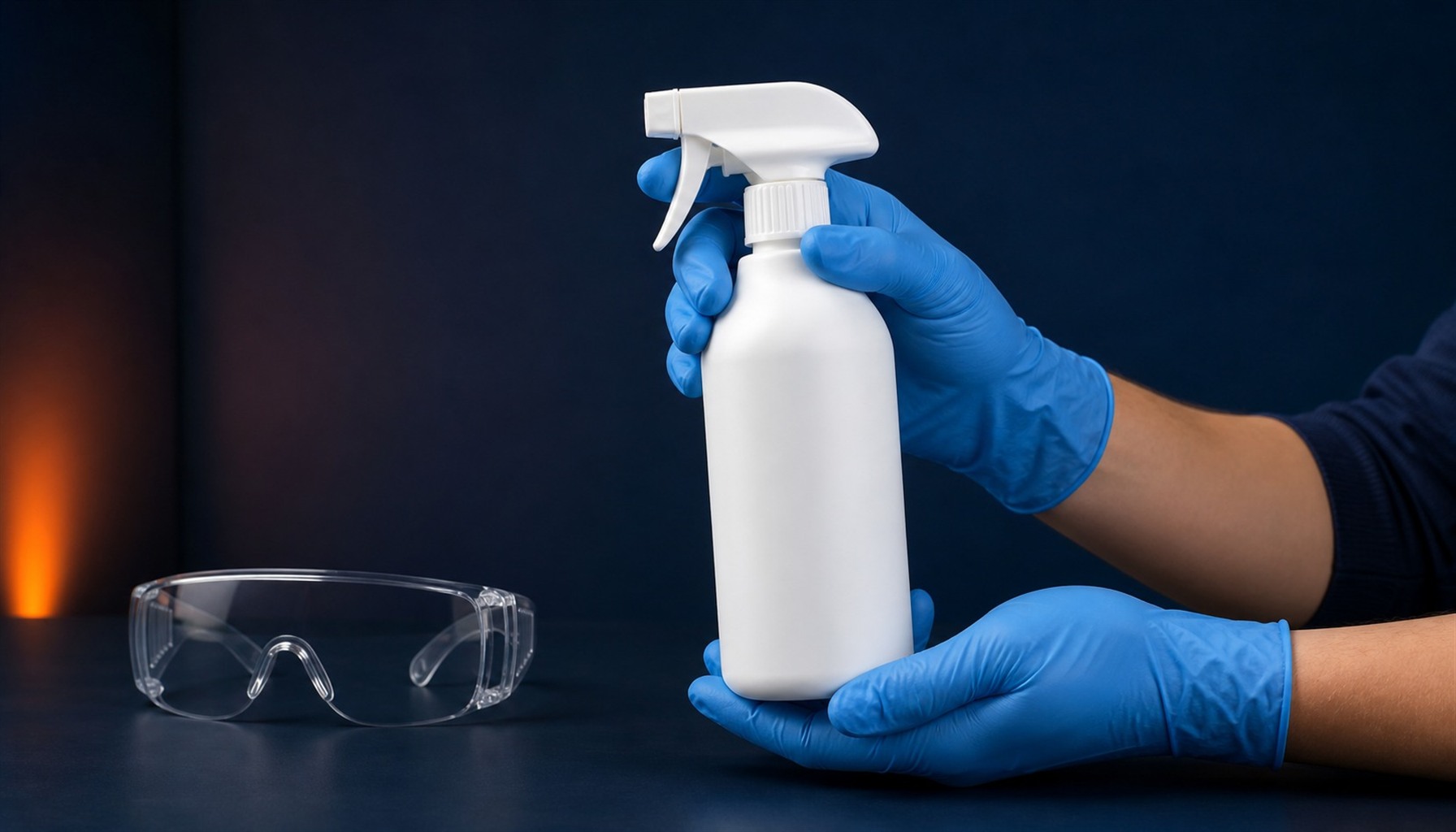
- Wear gloves and eye protection. Nitrile or rubber gloves and safety glasses are cheap insurance for any cleaning job.
- Ventilate the area. Open a window or work outdoors when you can.
- Spot-test first. Try a hidden area before treating the whole surface.
- Do not mix chemicals. Never combine an acid cleaner with bleach or other products; use it on its own.
- Rinse thoroughly. A full rinse removes residue and stops the reaction once the job is done.
- Store it sealed and labeled, away from children and pets.
Surfaces that are NOT acid-safe
Even a gentle acid cleaner should be kept off certain materials:
- Natural stone — marble, granite, travertine, and limestone will etch.
- Unsealed grout and porous concrete (unless the label approves it).
- Bare aluminum, brass, and some soft metals without testing.
- Delicate or antique finishes.
For those materials, reach for a pH-neutral cleaner instead. When in doubt, test a hidden spot and wait a few minutes.
What acid cleaners are great at
- Removing hard water stains and mineral deposits
- Dissolving rust from metal, chrome, and tools
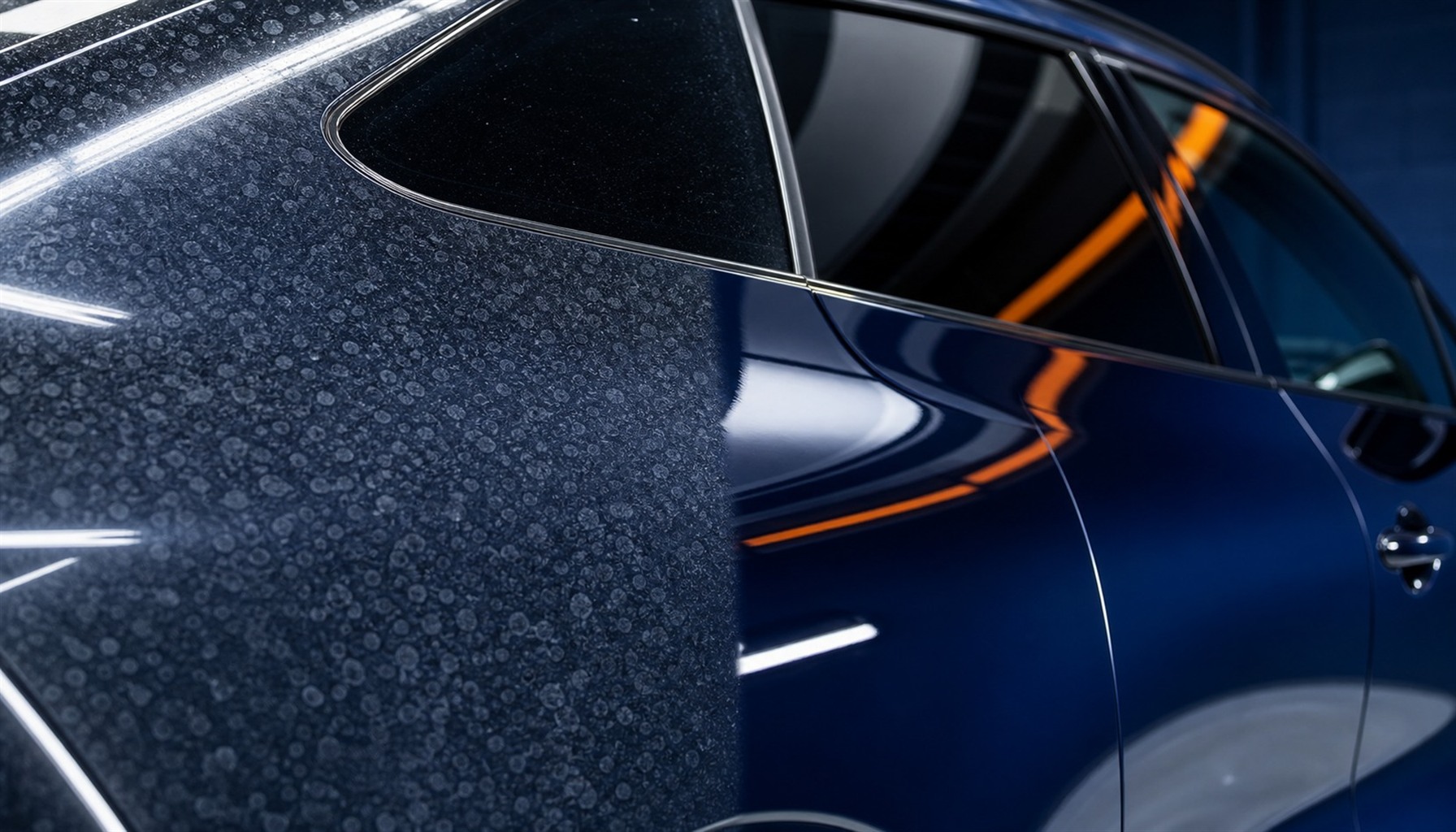
- Cutting through brake dust on car wheels
- Clearing water spots from glass and chrome
- Cleaning tile, ceramic, and bathroom fixtures
Frequently asked questions
Is acid cleaner safe to use at home?
Yes. Used as directed — gloves on, ventilated, spot-tested, and rinsed — a properly formulated acid cleaner is safe for household use and is far more effective than general cleaners on scale and rust.
Will it damage my surfaces?
On acid-safe surfaces like glass, ceramic tile, chrome, stainless steel, and sealed finishes, no. The key is avoiding natural stone and other sensitive materials, and rinsing thoroughly after use.
What makes Titan Acid Cleaner different?
Titan uses a natural acid base designed to deliver professional cleaning power while being safer for users and surfaces than caustic industrial cleaners. It is made in the USA and backed by a 30-day satisfaction guarantee. Learn more about our story and formula.
The bottom line
An acid cleaner is not something to fear — it is a precise tool. Understand what it is good at, respect the simple safety steps, keep it off natural stone, and you have the most effective way to beat rust and mineral buildup. Shop Titan Acid Cleaner and clean smarter.